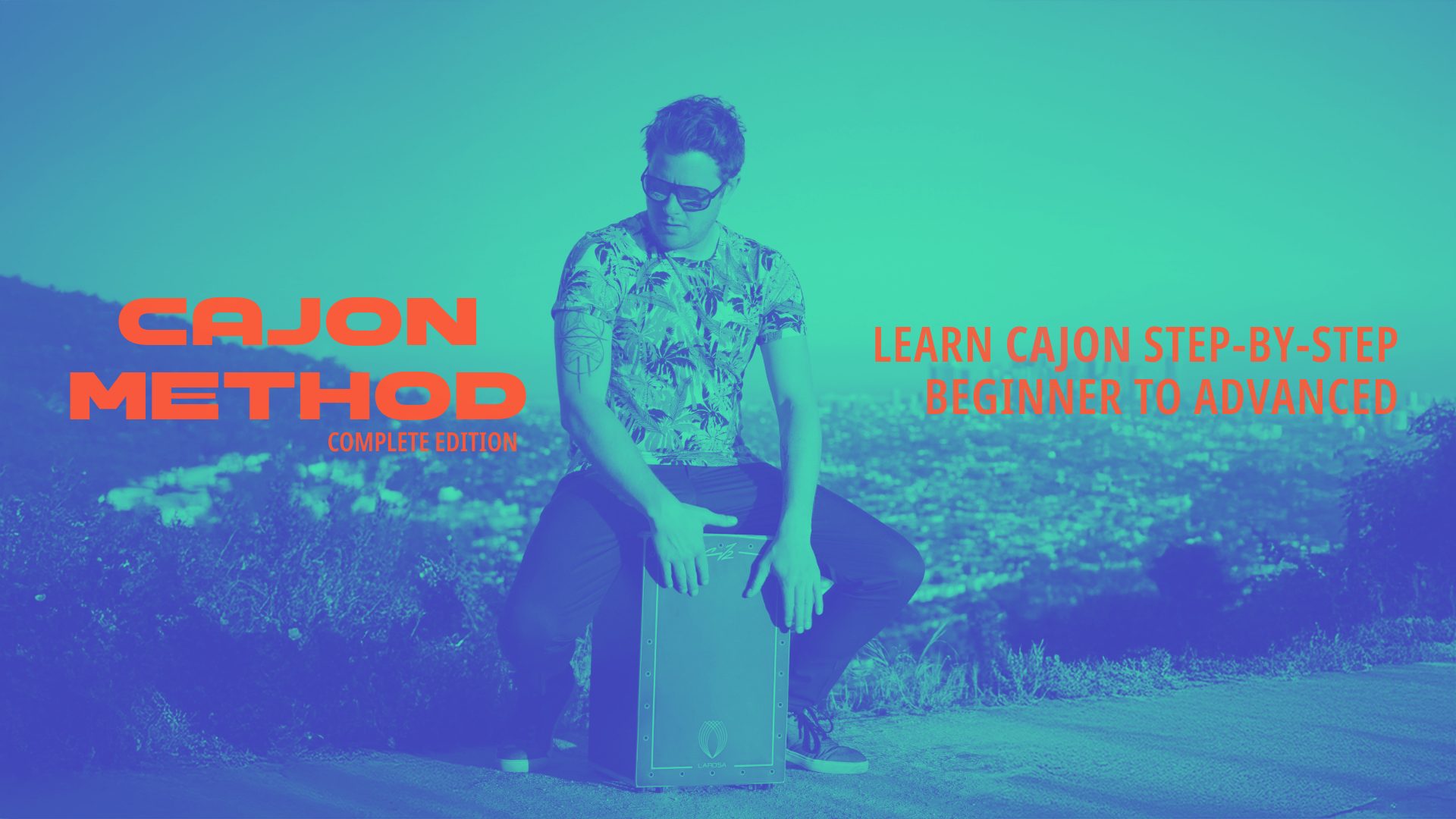
Paul Jennings Cajon Method
The Paul Jennings Cajon Method is a complete, step-by-step video course designed to take you from your very first beat all the way to advanced techniques you can use in performance. Over the years, I’ve spent more than 15 years teaching cajon and percussion, and over 25 years performing professionally, and I’ve designed this course to share everything I’ve learned in a clear, practical way. My goal is to give you the tools, tips, and musical insight you need to feel confident, creative, and inspired every time you play.
-
Beginner
-
BEGINNER INTRO
Welcome to the Paul Jennings Cajon Method, your step-by-step video course that will take you from the very beginning right through to advanced techniques.
-
Lesson 1: POSTURE AND HAND STRETCHES
Due to that nature of how the cajon is played, having good posture when playing the cajon is essential. First of all, when you take your seat on the cajon you need to sit back far enough so that your hands can have good access to the playing surface.
-
Lesson 2: BASS & SLAP TONES
The bass and slap tones are the very first tones you should learn on the cajon.
-
Lesson 3: BASS & SLAP EXERCISES
In this lesson you will learn two basic exercises that will help you refine your bass and slap tone.
-
Lesson 4: HIGH SLAP TONE
The high slap tone is a great variation of the regular slap tone. You can use it in rhythms or fills, or in any way that sounds good and you see fit to be honest.
-
Lesson 5: BASIC 4/4 RHYTHM
Congratulations! Now you will learn your first rhythm of the PlayCajon Beginner Course. It is a simple rhythm in the time signature of 4/4. What this means is in each measure there are 4 beats.
-
Lesson 6: THE MID TONE
The mid tone is a very useful tone to have at your disposal. This tone is used for rhythms but I use it a lot for fills and also for the all important cajon pitch change foot slide technique you will learn later in the course.
-
Lesson 7: TONE EXERCISES
Once we have learned how to play each tone it is very important that we practice the tones so that you can play them easily and they feel second nature to you.
-
Lesson 8: DOUBLES EXERCISE
Many are played hand-to-hand, meaning no two hits or more are played on one hand before moving to the other. It is important to get used to playing double hits on any percussion instrument.
-
Lesson 9: 1 TO 8 BEAT EXERCISE
This exercise is a great one for warming up. It is also great to get your brain working better with your hands. It is used by many drum set players or marching snare drummers but can also work well on the cajon and most other hand drums too.
-
Lesson 10: ROCK 1
Now you will learn how to play a basic rock rhythm on the cajon.
-
Lesson 11: THE FLAM
Now you are going to learn a technique that is widely used in both hand drumming and drum set playing. It is called the flam and it is can be used in all kinds of ways from placing in rhythms, to playing in fills.
-
Lesson 12: GHOST NOTES
Ghost notes are notes or hits that are played at a low volume and that are played under the main groove.
-
Lesson 13: ROCK 2
Another rock rhythm for you to learn.
-
Lesson 14: RUMBA 1
Rumba is a fantastic rhythm and is very common for cajon and many types of Latin music. There are many types of rumba that are played in many parts of the world.
-
-
INTERMEDIATE
-
INTERMEDIATE INTRO
Welcome to the Intermediate section of the course. Here you will move on from the basics and take your playing to the intermediate level.
-
Lesson 15: RUMBA 2
Rumba 2 is a nice variation of Rumba 1 which was in the beginner section. You do not have to have learned Rumba 1 to learn this one. Rumba is a great thing to play on the cajon.
-
Lesson 16: FUNK 1
Funk is a genre that is similar to rock but has a different (funky) feel.
-
Lesson 17: CHANGING THE PITCH
Changing the pitch of the cajon with the foot slide technique is something that most cajon players use. It is a fantastic way to get a wide range of tones from your cajon and also works great for use in both fills and rhythms.
-
Lesson 18: PITCH CHANGE EXERCISES
Two exercises that you can use to work on and refine your pitch change technique.
-
Lesson 19: SIXTEENTH BEAT ROCK
In this lesson you will learn a rock rhythm with a sixteenth beat feel.
-
Lesson 20: SIXTEENTH BEAT PITCH CHANGE
A sixteenth beat rhythm which incorporates the pitch change technique.
-
Lesson 21: 3 Fills in 4/4
As drummers and percussionists our main focus should be with playing the right groove or part that fits the music we are playing.
-
Lesson 22: RUMBA 3
Another variation of rumba for the cajon. Try taking the other rumba rhythms you have learned and use them with Rumba 3.
-
Lesson 23: HIP HOP 1
Hip hop is a fantastic funky style to play on cajon. It could also be played as a funk rhythm but the style we are playing it is is hip hop.
-
Lesson 24: PLAYING THE SIDES
Of course most of the time when we play the cajon we are playing the front surface (tapa) to create the sound. It is possible to incorporate some of the other surfaces of the the cajon though.
-
Lesson 25: REGGAE 1
Of course most of the time when we play the cajon we are playing the front surface (tapa) to create the sound. It is possible to incorporate some of the other surfaces of the the cajon though.
-
Lesson 26: PARADDIDLE
The paradiddle is one of the most popular rudiments in drumming. It is used widely in snare drumming and also drum set playing and is also very useful on the cajon.
-
Lesson 27: BLUES SHUFFLE
Here is a blues shuffle rhythm on the cajon. Listen closely to the shuffle triplet feel of the rhythm and also the high hat pattern that I am playing on the high slap tone.
-
Lesson 28: TRAIN BEAT
The train beat is a widely used rhythm in bluegrass, country, and other roots genres. The train beat also works great on cajon and many players use the train beat for all kinds of songs
-
-
ADVANCED
-
ADVANCED INTRO
Welcome to the advanced section of the course!
-
LESSON 29: BASS ROLL TECHNIQUE
The bass roll is a technique that I personally use all the time. It allows you to play bass tones faster with good power while using less energy.
-
LESSON 30: PALM AND FINGER ROLLS
The bass roll is a technique that I personally use all the time. It allows you to play bass tones faster with good power while using less energy.
-
LESSON 31: GUAGUANCO
Guaguanco is a form of Cuban rumba. It is a great rhythm that can also work well when played in conjunction with a drum set playing a rock or funk groove.
-
LESSON 32: PURDIE SHUFFLE
The famous Purdie Shuffle is a rhythm created by Bernard Purdie. Variations of the Rhythm have also been used in hit songs by Led Zeppelin, Toto, and Steely Dan.
-
LESSON 33: BRUSHES ON CAJON
Brushes on the cajon sound great and more and more players are now using brushes on the cajon.
-
LESSON 34: 3/4 RHYTHM WITH BRUSHES
Now you will learn a rhythm in the time signature of 3/4 that you can play with your brushes.
-
LESSON 35: FUNK 2
Now you will learn Funk 2 rhythm. It is a widely used funk groove that has a late snare hit that gives it a nice funky vibe.
-
LESSON 36: POLYRHYTHMIC FILL
Here is a cool polyrhythmic fill.
-
LESSON 37: THUMB TRIPLETS
The thumb triplet is a very useful technique and can really bring a rhythm to life or be used in fills.
-
LESSON 38 THUMB TRIPLET ROCK
In this lesson you will learn a rock rhythm that incorporates the first thumb triplet from the previous lesson.
-
LESSON 39: SHAKERS WITH CAJON
Using shakers with the cajon is a popular thing to do these days.
-
LESSON 40: CYMBALS WITH CAJON
Another common addition to the cajon is cymbals. Many percussionists use cymbals with their hybrid cajon setups these days.
-
LESSON 41: LA MANO SECRETA
La Mano Secreta or, “the secret hand” is a popular technique or rudiment that is typically used on congas.
-
LESSON 42: BULERIAS
Bulerias is a Flamenco rhythm that is widely used on cajon particularly in Spain.
-
What You'll Learn
BEGINNER SECTION
You’ll start by learning the essential foundations: correct posture and hand positioning, how to produce clean bass and crisp snare tones, and how to develop consistent timing from day one.
From there, you’ll build your first rhythms, understand how grooves fit into real music, and gain the core techniques every cajon player needs.
Each lesson is broken down clearly and practically, so you’re not just copying patterns, you’re understanding how and why they work.
INTERMEDIATE SECTION
In this section of the course you will move on from the basics and take your playing to the intermediate level.
This course consists of 15 lesson videos that cover many intermediate level techniques and rhythms including: how to change the pitch of your cajon with the foot slide, playing rhythms with sixteenth beat ghost notes, playing fills, using the sides of your cajon, and new rhythms including funk, blues, reggae, hip hop, rumba 2 & 3, and train beat.
advanced SECTION
In the final part of the Paul Jennings Cajon Method you will move on from the intermediate section and learn key advanced cajon techniques, rhythms, and approaches.
You will learn: the bass roll technique, palm & finger rolls, polyrhythms, guaguanco, the Purdie shuffle, how to use brushes on cajon, using cymbals & shakers with cajon. You will also learn funk, waltz, more rock and flamenco rhythms.
Each section of the Paul Jennings Cajon Method is designed to guide you, (with practice), from your very first beat to having a solid understanding of fundamental cajon techniques, an understanding and ability to play a range of rhythms & grooves, and the confidence to take your cajon out to perform in public or just for your own hobby.